Reeded Glass: Stylish Privacy for Internal Doors & Screens
August 28, 2024

By Scott Hilton

August 28, 2024
Open-plan living can make a home feel brighter and more spacious, but it is not always practical.
A home office still needs some separation. A kitchen can become noisy. And a completely clear glass door can leave a room feeling more exposed than you expected.
Reeded glass internal doors offer a useful middle ground. The textured glass softens the view between rooms while still allowing daylight to move through the home. You get a clearer sense of separation without putting up a solid barrier or making the adjoining room feel dark.
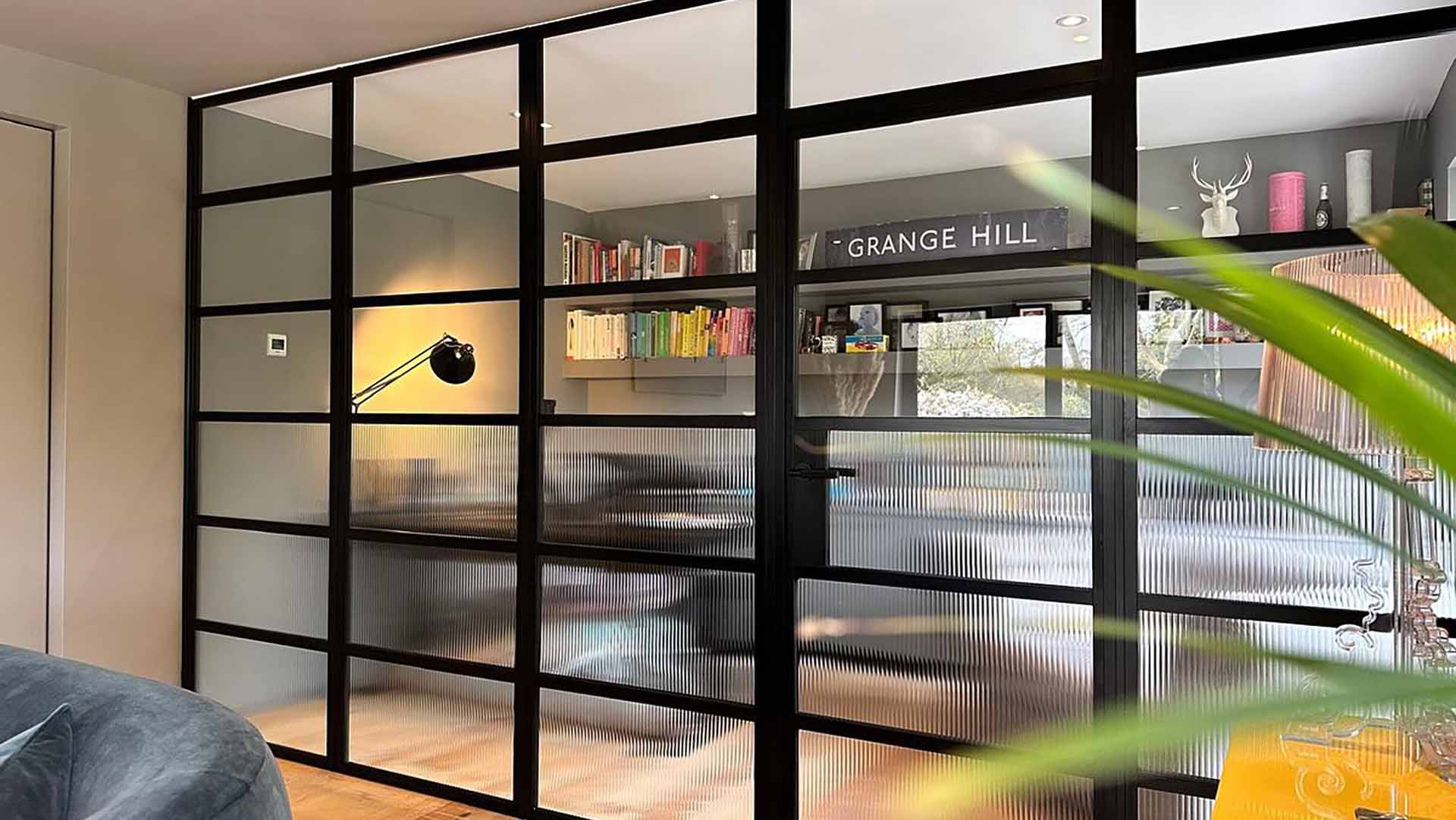
Reeded glass has a repeated vertical texture running through the pane. The ridged pattern distorts shapes and details on the other side while continuing to let light pass through.
You may also see it described as fluted glass. The two terms are commonly used for the same vertically textured appearance.
It has a little more character than plain clear glass, but it does not feel overly decorative. This is why it works so well with slim, steel-look aluminium frames. The vertical lines in the glass sit naturally alongside glazing bars and Art Deco-inspired door layouts.
This is usually the first question homeowners ask.
Reeded glass gives you partial privacy rather than complete concealment. It blurs details, faces and everyday clutter, but you may still see movement, colour or silhouettes through the pane, particularly when someone is standing close to it.
For many rooms, that balance is exactly the point.
A home office can feel separate without becoming boxed in. A hallway can borrow light from a living room. A utility or dressing area can be partly screened without needing a solid door.
For bathrooms and en-suites, think carefully about the layout and lighting. Reeded glass may work well where the door is offset from the main bathroom area, but frosted or another obscure glass may be more suitable where a higher level of privacy is needed.

Working from home often means trying to create a proper workspace without sacrificing half the house to it.
A reeded glass internal door can hide some of the visual clutter from desks, monitors and paperwork while still borrowing light from the adjoining room.
For a wider opening, a door can also be paired with matching fixed internal screens to form a more complete glazed partition.
A glazed divide between a kitchen and living room gives you flexibility.
You can close the doors to reduce noise or cooking smells, but the two rooms still feel visually connected. Open them again when you want the space to feel more sociable.
Where floor space is tight, internal sliding doors are particularly useful because they do not need clearance to swing open. Reeded glass adds privacy and texture without removing the sense of light between the spaces. Decorio’s sliding-door range offers reeded glass as an option alongside clear and frosted glazing.
Hallways are often short on natural light, especially in older homes.
Replacing a solid internal door with reeded glass can brighten the route through the house while avoiding a completely open view into the next room.
It also works well for dressing rooms, pantries and utility areas, where you may want daylight but would rather not have shelving, storage or laundry fully on display.
The right glass depends on what matters most in the room.
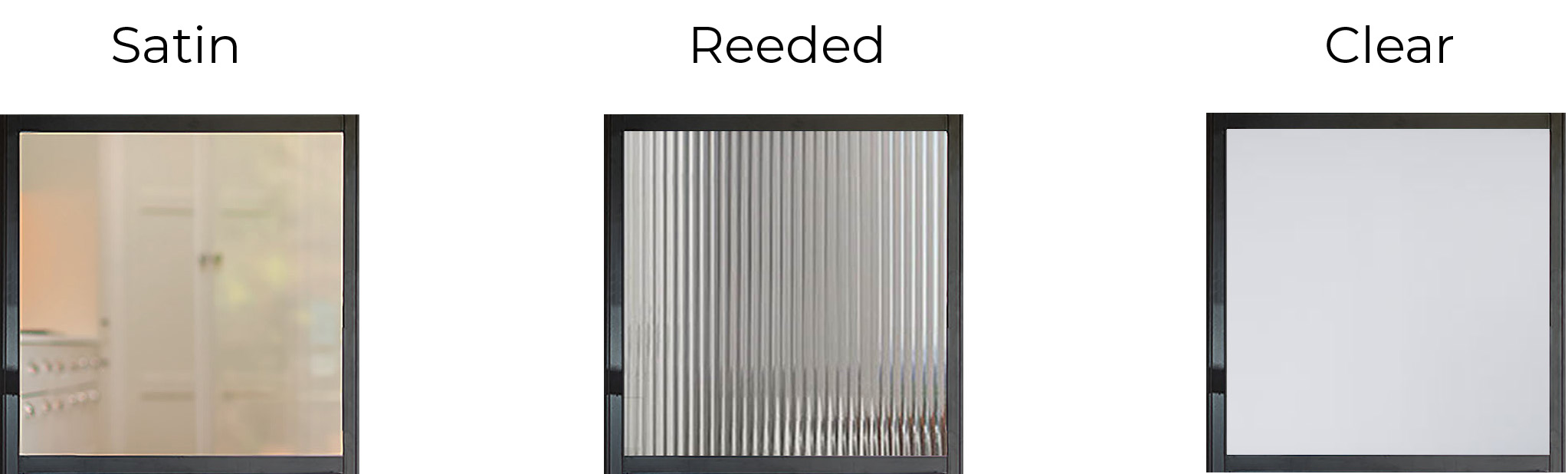
Clear glass lets through the most direct light and keeps sightlines open. It suits kitchens, dining rooms and living areas where privacy is not a concern.
Reeded or fluted glass still allows light to move between rooms, but it breaks up the view and adds texture. It tends to suit home offices, hallways, dressing areas and room dividers.
Frosted glass creates a more even, cloudy finish. It may be the better option for bathrooms, utility rooms or workspaces where concealing the room matters more than maintaining a visual connection.
You do not have to choose one glass style for the whole house. Clear glazing may work best in the main living areas, while reeded or frosted glass can be used in rooms where more privacy is needed.
Reeded glass is available across Decorio’s internal range including hinged doors, sliding doors and fixed screens. This allows the same glass style to be carried across several openings, helping the doors and partitions feel like part of one considered design rather than separate purchases.
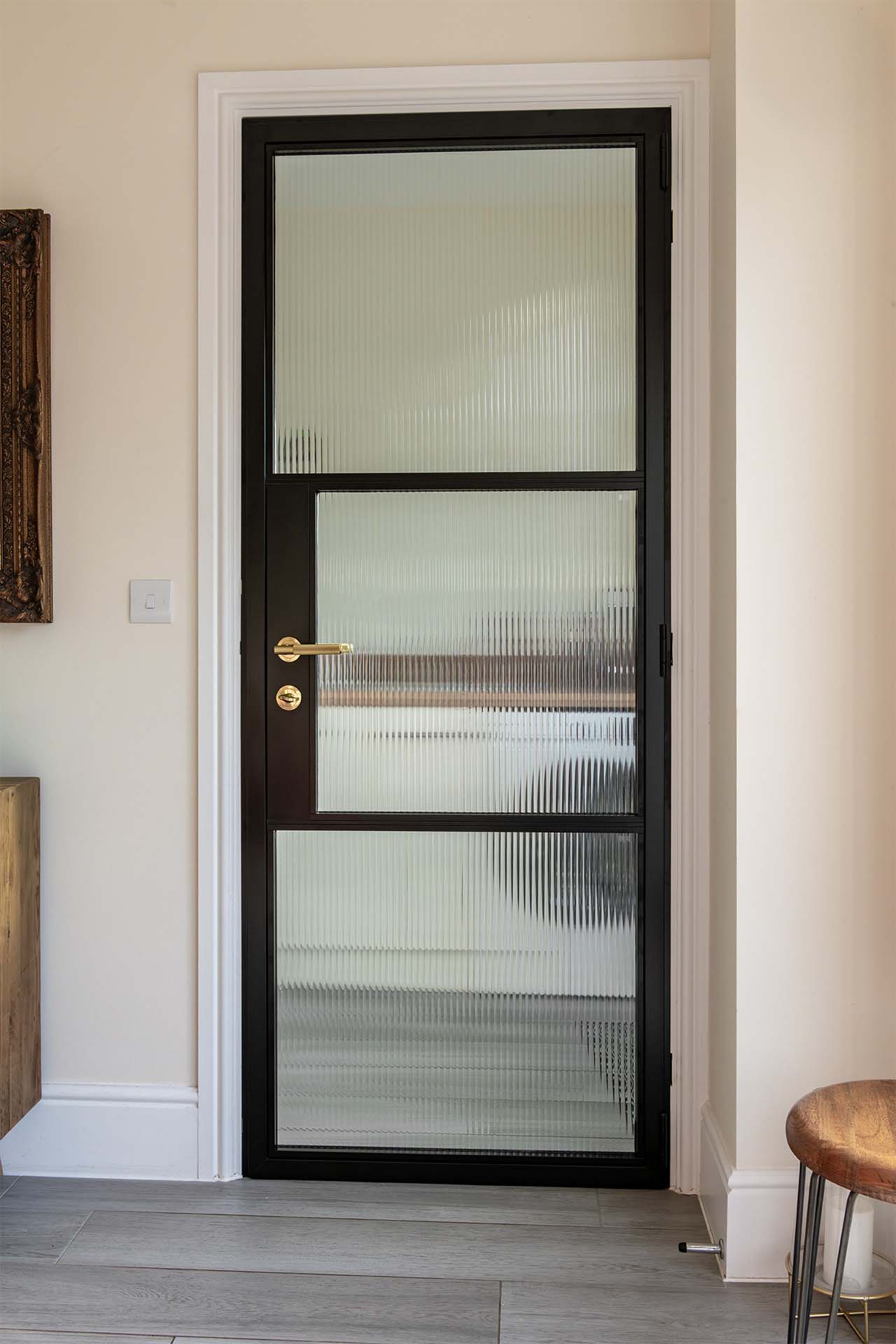
Reeded glass makes the most sense when clear glass feels too exposed, but a solid or heavily obscured door would block too much light.
It will not provide complete privacy in every situation, so be honest about what you need from the room. For home offices, hallways, dressing spaces and glazed room dividers, though, it often gives a sensible balance between openness and separation.
Decorio products are supplied through a network of professional installers. Your local installer can measure the opening, talk you through the door layout and glazing options, provide your quotation and complete the installation.
Fill our enquiry form on our contact us page to find your nearest Decorio installer and get the ball rolling.