How to Add Art Deco Style to Windows and Doors | Decorio
May 18, 2022

By Scott Hilton

May 18, 2022
Art Deco interiors are instantly recognisable. Strong geometric lines, contrasting colours and luxurious finishing details combine to create a look that feels glamorous without becoming overly decorative.
Although the movement rose to prominence during the 1920s and 1930s, many of its defining features work beautifully in modern homes. Slim aluminium frames, large areas of glass and carefully arranged glazing bars can introduce Art Deco character while maintaining the light, open feeling expected from a contemporary interior.
But how do you create the look without making your home feel like a film set? Here are the features that make the greatest difference.
Art Deco design is built around shape, symmetry and contrast.
Unlike the natural curves and floral details associated with Art Nouveau, Art Deco favours clean lines, repeating geometric patterns and bold materials. Common features include:
You do not need to include every feature. A few carefully chosen details can introduce the style without overwhelming the room.
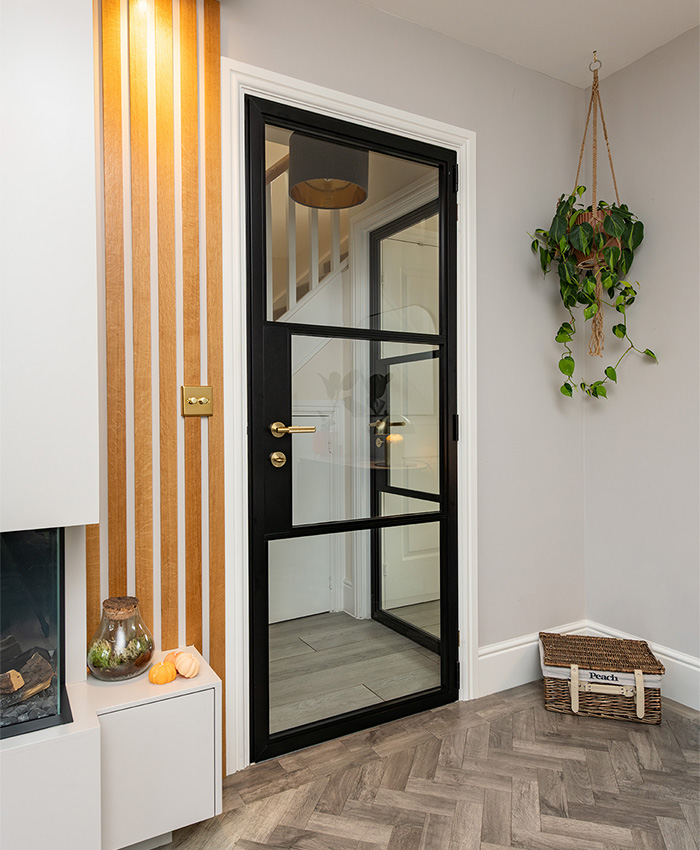
Black-framed doors and screens are particularly effective in an Art Deco-inspired interior. The dark aluminium creates a strong outline around the glass, giving the room definition while allowing natural light to travel between adjoining spaces.
Our internal hinged doors can be used between kitchens, living rooms, hallways and home offices. They provide a physical division between rooms without creating the enclosed feeling of a solid wall or traditional timber door.
Textured Black is the stock colour for the Decorio internal collection, making it a natural choice for this style. Its subtle textured finish adds depth to the frame and works particularly well alongside warm metallic details, patterned flooring and darker wall colours.
Glazing bars are one of the most effective ways to give aluminium windows and doors an Art Deco influence.
Horizontal bars can create a streamlined appearance inspired by the architecture of the 1920s and 1930s. Alternatively, a symmetrical grid can make the glass feel like an intentional architectural feature rather than simply a transparent panel.
The layout should complement the proportions of the opening. Too many bars can make a small door appear cluttered, whereas a restrained arrangement can emphasise its height or width.
For a coordinated result, repeat similar glazing-bar positions across adjoining doors, windows or fixed screens. This creates the order and symmetry that sit at the heart of Art Deco design.
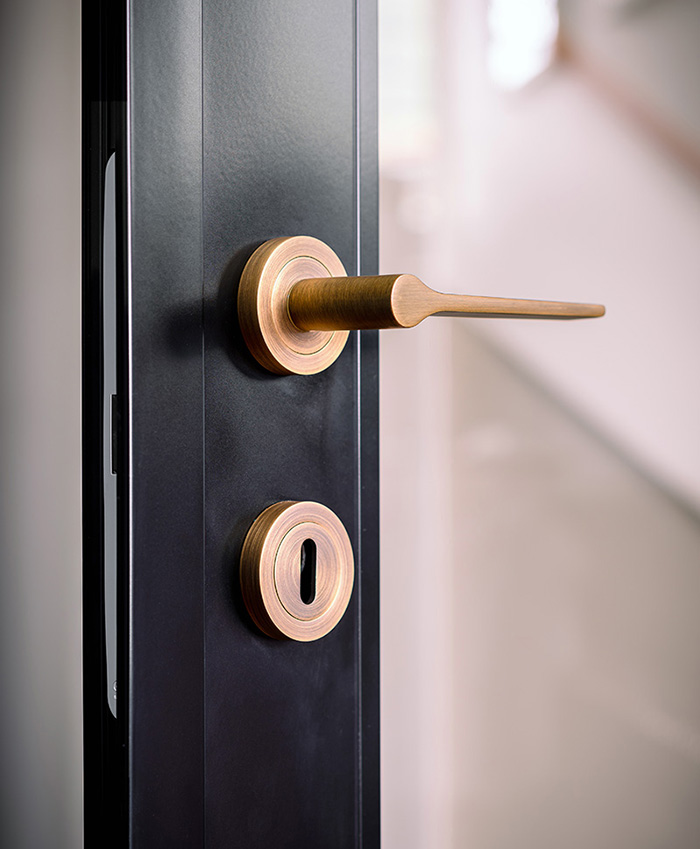
Art Deco is a style in which small details matter.
A decorative handle can provide a focal point against a simple black frame. Look for designs with stepped edges, strong angles or a metallic finish that complements other elements within the room.
Decorio doors can be paired with a selection of handle styles, including designs influenced by the geometric character of the Art Deco period. Available hardware depends on the chosen door system and configuration, so discuss your preferred finish with your local Decorio installer before ordering.
For a cohesive scheme, coordinate the door furniture with cabinet handles, lighting, taps or furniture details. The finishes do not need to match perfectly, but they should feel as though they belong to the same overall palette.
Art Deco interiors often use patterned or decorative glass to add visual interest.
Reeded glass has a distinctive fluted surface that gently obscures the view through the panel. It allows light to pass between rooms while providing more privacy than clear glass, making it useful for home offices, utility rooms, kitchens and dressing areas.
Pairing reeded glass with a dark aluminium frame creates a strong architectural feature. The vertical texture can also help emphasise the height of a door or fixed screen.
Explore more ways of using reeded glass and other glazing options within your design.
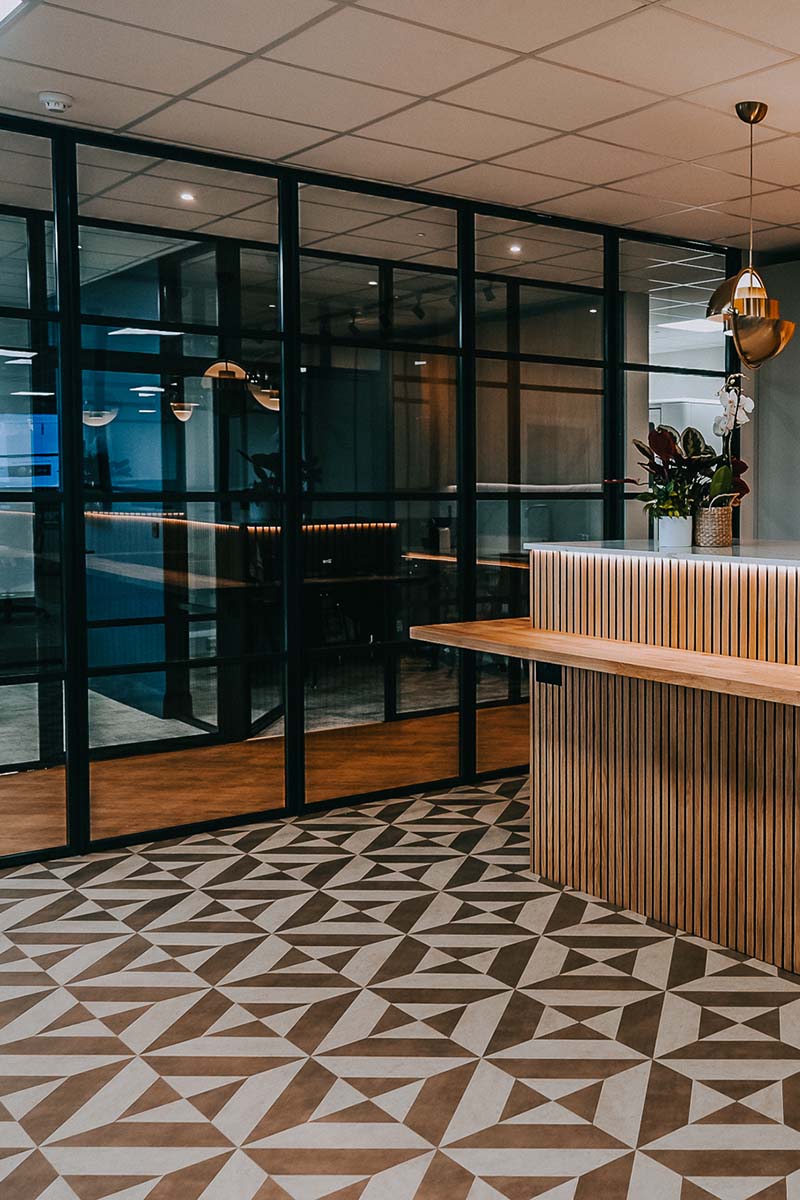
Open-plan living creates bright, sociable spaces, but sometimes homeowners still want separation between different areas.
A set of glazed French doors can divide a kitchen and living space without significantly reducing natural light. Where floor space is limited, internal sliding glass doors provide an alternative that does not require room for the door leaves to swing.
For larger openings, doors can also be combined with fixed internal screens to form a wider glazed partition. Repeating bars across the complete screen produces the symmetry and geometric rhythm associated with Art Deco architecture.
Art Deco influence does not have to stop inside the home.
Slim heritage aluminium windows can provide a steel-inspired appearance while incorporating the thermal break, glazing and weather performance expected from a modern external window system.
Matching external heritage doors can then carry the same frame colour and glazing-bar arrangement through entrances, garden rooms and rear extensions.
Using a consistent design language across the internal and external elements helps the property feel considered rather than pieced together.
The most successful Art Deco-inspired interiors borrow from the period without trying to reproduce it exactly.
Start with one or two defining features, such as slim black frames, symmetrical glazing bars or a statement handle. These can then be supported by lighting, colour and furniture choices elsewhere in the room.
Decorio manufactures heritage-style aluminium doors, windows and screens for installation by approved local home-improvement companies. We do not sell directly to homeowners, but we can connect you with a suitable installer covering your area.
Tell us about your project, and we will help you take the next step.